
The Cost of Running the Wrong Track — What it’s Actually Costing You
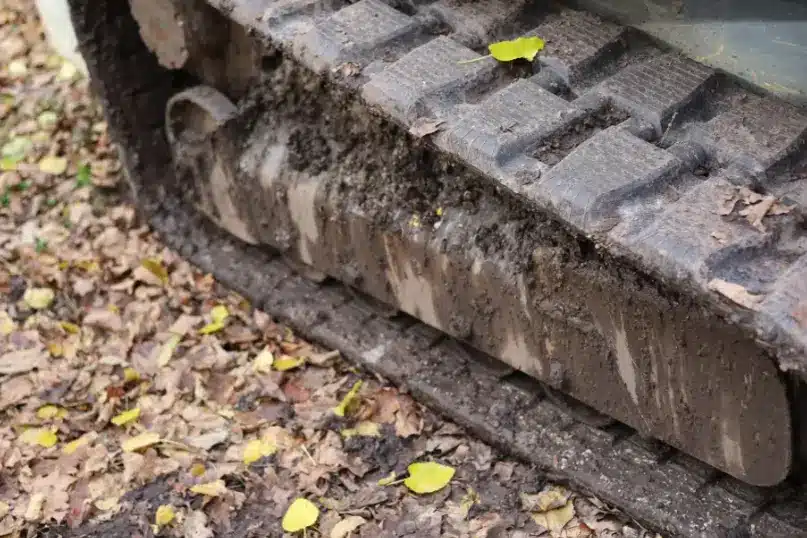
Running a worn-out track or the wrong track specification for your terrain isn’t just a performance annoyance — it’s a slow, invisible money leak that puts stress on your entire undercarriage and quietly erodes your margins job by job. Most operators don’t connect the dots until the damage is already done.
Here’s what the wrong rubber track is actually costing you.
1. Accelerated Undercarriage Wear
This is the biggest hidden cost. Rubber tracks don’t wear in isolation — they’re part of a system that includes your drive sprockets, rollers, and idlers. When a track runs at the wrong tension, or when the tread pattern creates excess stress (like running a highly aggressive C-pattern on hard pavement), every hour adds cumulative damage to the components beneath it.
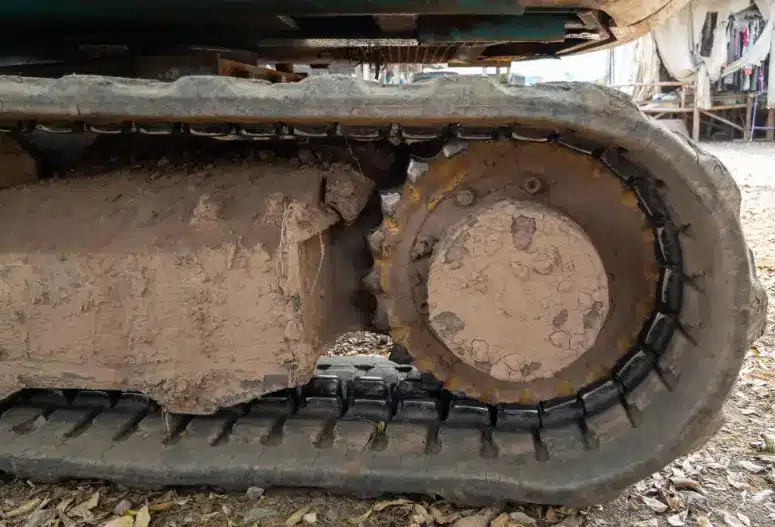
Over-tensioned tracks force the drive sprocket, rollers, and idler to work against extra resistance every rotation. Over time this causes premature bearing failure and worn sprocket teeth.
Under-tensioned tracks slap and bounce against the undercarriage, causing internal wear on the track itself and accelerating roller damage from uneven loading.
Wrong tread pattern on the wrong surface creates localized stress points that chunk lugs, crack the rubber body, and ultimately expose the steel cord reinforcement — at which point replacement is immediate and mandatory.
Real cost perspective: A replacement rubber track set for a mid-size CTL typically runs $1,200–$2,500. A full undercarriage rebuild — sprockets, rollers, idlers, and tracks — can run $8,000–$18,000 or more depending on the machine. Preventing one undercarriage rebuild pays for many sets of correctly-specced tracks.
2. Reduced Fuel Efficiency
A worn or improperly tensioned track increases rolling resistance — your machine has to work harder to move the same distance, lift the same load, and run the same attachment. This translates directly into fuel consumption.
Worn tracks also reduce the machine’s traction efficiency. When lugs are too short to grip effectively, your drivetrain spins harder to compensate, burning more fuel for the same output. On a machine running 8 hours a day, even a 5–10% increase in fuel consumption adds up quickly across a season of work.
3. Operator Fatigue and Lost Productivity
Worn rubber tracks transmit significantly more vibration to the operator cab. On a CTL or mini excavator running a smooth, healthy track, vibration is absorbed by the rubber compound and the cushion idler system. A deteriorated track turns every hour of work into a jarring experience that fatigues operators faster and reduces precision on detailed work like grading, backfill, or attachment-based tasks.
Beyond comfort, instability caused by worn or wrong-pattern tracks slows down any operation requiring fine positioning. You’ll move slower, make more corrections, and get less done per shift — all without ever consciously connecting the cause to the track.
4. Surface Damage Liability
This one catches contractors off guard. If your machine is equipped with an aggressive tread pattern — like a C-pattern or XT tread — and you’re operating on finished asphalt, decorative concrete, pavers, or a client’s lawn, the lugs will do visible damage to the surface. That damage belongs to you.
- Aggressive lugs on asphalt or concrete score and gouge the surface, particularly during turns.
- High-lug tracks on turf tear grass and disturb the root layer, which is especially costly on athletic fields, golf courses, or premium landscaping jobs.
- Clients expect their surfaces returned in the condition they were found. A mismatched track puts you in a position of either refusing work or absorbing a remediation cost.
The right tread pattern for the surface eliminates this risk entirely. A multi-bar or block pattern on hardscape, or a bi-directional tread on turf, costs the same as any other track — but costs nothing in surface liability.
Not sure which pattern fits your application? See our complete guide: Which Track Pattern is Best for Each Ground Condition?
5. Running the Wrong Pattern for the Application
Even a brand-new, high-quality track will underperform, and wear prematurely, if it’s the wrong tread design for your primary terrain. Here are the two most common mismatches we see:
| Wrong Combination | What Happens | The Real Cost |
|---|---|---|
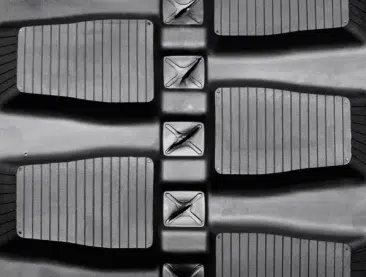
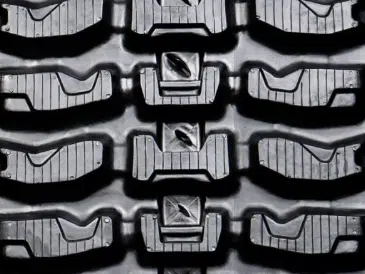
| Block pattern in deep mud or soft soil | Blocks clog and lose bite; machine slips and spins | Longer job times, more fuel, frustrated operators, possible stuck machine |
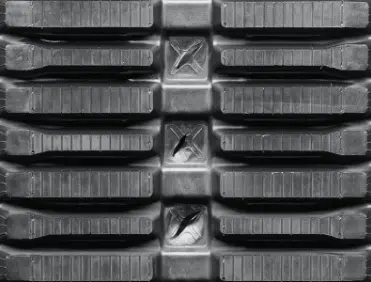
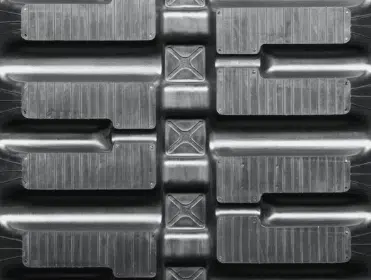
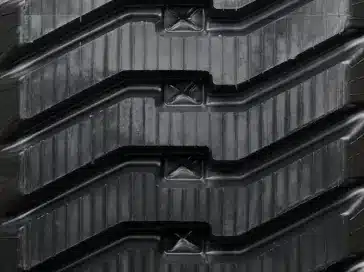
| C-pattern or XT on asphalt/concrete | Aggressive lugs chunk and tear on hard surfaces; track wears in months instead of years | Premature track replacement + surface damage liability |
| Multi-bar on rocky or loose terrain | Minimal lug depth can’t grip; machine loses traction and stability | Safety risk + reduced productivity on rough ground |
| Bi-directional on heavy construction sites | Pattern designed for turf is too gentle for demanding dig/push work | Rapid tread wear, poor performance, early replacement |
What a Correctly Configured Track Actually Returns
The math is straightforward. A quality rubber track for a mid-size CTL, correctly matched to the application and maintained at proper tension, can realistically deliver 1,200–2,000 hours of service life. Run that same machine on the wrong pattern, ignore tension checks, and you may see that number cut in half — or worse.
Consider what that looks like over three years of operation:
- Correct spec: One track replacement, healthy undercarriage, no surface liability claims.
- Wrong spec / neglected tension: Two to three track replacements, one or more undercarriage component replacements, possible surface repair claims. Total cost easily 3–5x higher.
The track itself is rarely the most expensive part of getting it wrong. It’s everything the wrong track damages on its way to failure.
Ready to Spec the Right Track for Your Machine?
Browse our full catalog by brand and machine model, or reach out — our team will help you match the right tread pattern to the terrain you actually work in.