
Why Every Excavator Owner Should Consider a Tilting Bucket
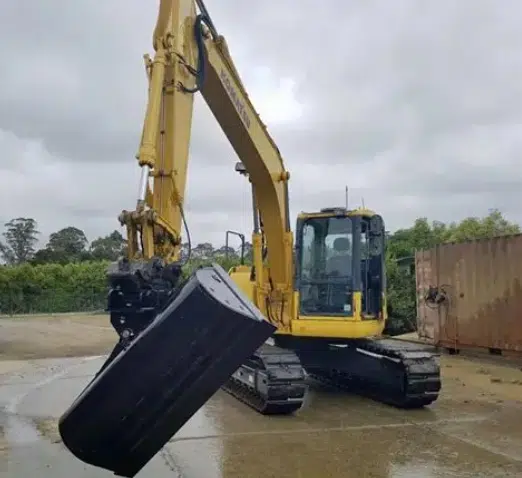
Every contractor is looking for ways to get more done in less time, with less equipment and fewer headaches. Most of the attention goes to bigger machines, more horsepower, or specialized attachments for niche jobs. But one upgrade consistently gets overlooked — and it doesn’t require buying a new machine, a new crew, or a new budget line. A tilting bucket might be the highest-return attachment you haven’t added yet.
Here’s what it is, what it actually changes on the job, and how to decide whether it makes sense for your fleet.
What Is a Tilting Bucket?
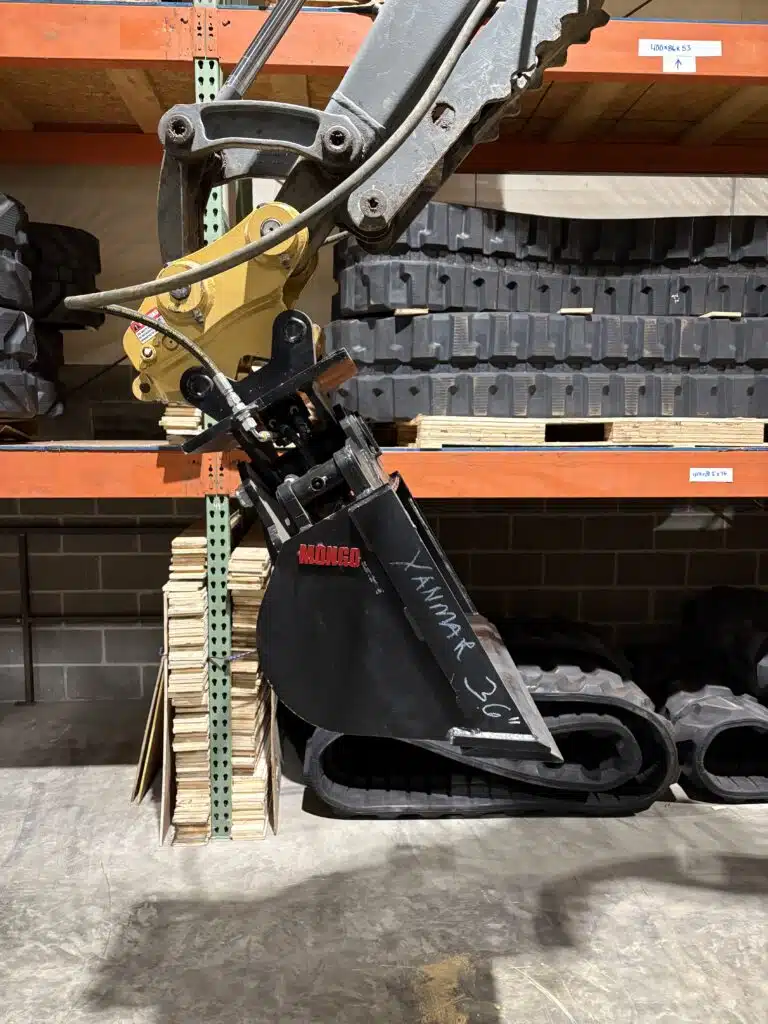
A tilting bucket is an excavator bucket that can pivot left and right — typically up to 45 degrees in each direction — using the machine’s existing hydraulic system. The operator controls the tilt from the cab, the same way they control the arm and boom. No getting out of the machine, no repositioning, no hand grading to clean up the angle.
A standard bucket is fixed. It digs straight down, and if the surface you’re finishing isn’t perfectly level with the machine, you either move the machine or you accept an imprecise result. A tilting bucket removes that trade-off entirely. The bucket goes to the angle the job requires. The machine stays put.
The Core Difference
A standard bucket forces the machine to match the terrain. A tilting bucket lets the bucket match the terrain instead — which means faster work, more precision, and less fuel burned getting there.
The Real Benefits — What Changes on the Job
| 45° Tilt range in each direction on most models | 30–60 Minutes saved per day on a typical grading job | 1 Machine doing the work that used to take repositioning all day |
Less Machine Movement, More Output
On any grading, ditch, or slope-shaping job, the machine moves constantly — tracking a few feet, adjusting position, tracking back. Every move burns fuel, adds hours to the undercarriage, and slows down the operator’s rhythm. A tilting bucket cuts a large percentage of those moves out entirely.
Instead of tracking the machine to match the grade, the operator adjusts the bucket and keeps working. The difference in pace on a ditch line or drainage channel is immediately noticeable — the work flows rather than starting and stopping every few
Finish Grading That Actually Finishes
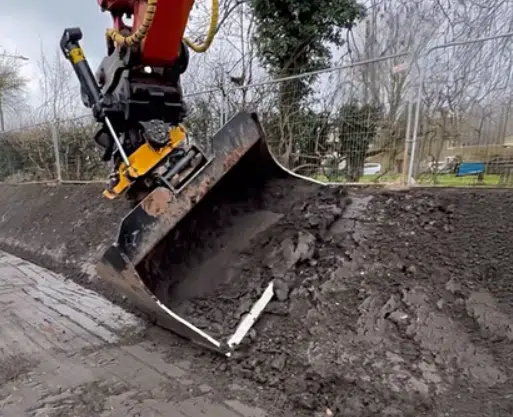
Finish grading is where tilting buckets earn the most praise from operators who’ve made the switch. Getting a surface dead-on flat with a fixed bucket requires either a very experienced operator making many small adjustments, or a second pass with hand tools to clean up the result. A tilting bucket gives the operator direct control over the plane of the cutting edge relative to the surface — which means cleaner results on the first pass, less rework, and a better-looking finished product.
Fuel Savings and Less Undercarriage Wear
This benefit is easy to underestimate. Every time a machine tracks to reposition, it consumes fuel and puts wear cycles on the undercarriage — the tracks, rollers, idlers, and drive sprockets that represent one of the most expensive maintenance categories on any excavator. Fewer repositioning moves means less tracking, less fuel burned, and fewer wear cycles on the undercarriage per job.
Over the course of a full season, operators who make the switch regularly report noticeable reductions in fuel consumption on grading-intensive jobs. The undercarriage savings are harder to quantify but equally real — every unnecessary tracking move is a wear cycle that didn’t need to happen.
Slope and Bank Work Gets Safer
Working on sloped terrain with a standard bucket pushes operators into uncomfortable positions — placing the machine at odd angles to reach the surface they need to cut, or working at the edge of stable ground to get the bucket where it needs to be. A tilting bucket reduces the need for that kind of positioning. The machine can stay on stable, level ground while the bucket reaches the angle the slope requires.
Where a Tilting Bucket Gets Used
The applications below come up repeatedly from contractors who run tilting buckets as a standard part of their attachment lineup — not an occasional tool, but a go-to for anything involving grade control or angled surfaces.
- Ditch and drainage construction — maintaining consistent slopes over long runs, shaping drainage channels with precise fall
- Finish grading — final site preparation before paving, seeding, or landscaping; getting surfaces right the first time
- Road shoulder and side-slope work — grading shoulders, matching crown, shaping road edges and embankments
- Retention pond and pond shaping — contouring shorelines and bottom grades, shaping berms
- Utility backfill — angling the bucket to work around pipe and conduit in tight trenches
- Residential and commercial site work — lot grading, swale shaping, preparing sites for foundations and flatwork
- Landscaping and terrain contouring — building up berms, shaping features, grading for drainage around structures
Is It Worth the Investment for Your Operation?
| ✓ Good Fit | ✗ May Not Need One |
|---|---|
|
– Frequent grading, ditching, or slope work – Road or driveway construction – Drainage and utility installs – Landscaping and site development – Any work on uneven or sloped terrain |
– Strictly straight digging — foundations, mass excavation – Work that’s entirely on flat, level ground – Minimal grading requirements in your typical jobs |
A Simple ROI Test
Think about your last five grading jobs. How much time did your operator spend repositioning the machine rather than cutting grade? If the honest answer is “a lot,” that time has a dollar value — and a tilting bucket gives most of it back. Even saving 30–45 minutes per working day adds up to more than 100 labor hours recovered in a single season.
The Bottom Line
f grading, ditching, or slope work is a regular part of your operation, a tilting bucket is one of the highest-return attachments you can add to your excavator. It won’t transform the jobs you’re already doing well. But for any work that currently involves constant repositioning, imprecise finish grades, or operators spending time cleaning up by hand what the machine couldn’t quite reach — it removes those problems completely.
The machine you already own gets more capable. The jobs you already do get done faster. And the jobs you’ve been turning down — or handing to a competitor with better finish grading capability — become part of your lineup.