
The Complete Buying Guide to Paver Tracks, Pads & Undercarriage
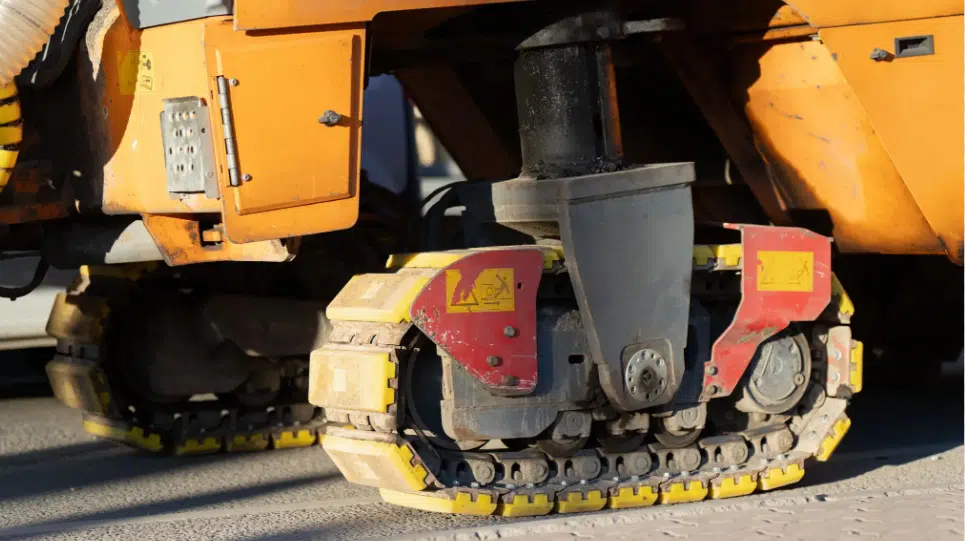
The undercarriage is the most expensive wear system on your machine, and often the least understood. Here’s how to buy the right paver tracks, pads, rollers, idlers, and sprockets the first time.
Whether you’re running an asphalt paver, a compact track loader, or a mini excavator, the undercarriage is what actually puts your machine’s power to the ground. On tracked equipment, the undercarriage system — tracks, pads, rollers, idlers, sprockets, and the frame that ties them together — typically accounts for a large share of a machine’s total maintenance cost over its life. Get it right, and it runs quietly in the background for thousands of hours. Get it wrong, and uneven wear cascades into every other component touching the ground.
This guide breaks down what actually matters when buying paver tracks and pads, how the rest of the undercarriage system fits together, and a practical checklist to work through before you order parts.
Start With the Application, Not the Part Number
Paver tracks and pads take a different kind of wear than excavator or loader tracks. They’re not digging or climbing rough terrain, they’re carrying a precisely calibrated machine across freshly graded base material, often at slow, continuous speeds, for hours at a stretch, frequently right behind hot mix asphalt. That combination of sustained heat and abrasive base material is what drives every real decision about tread pattern and rubber compound below.
It’s also worth knowing there are two general undercarriage styles in the paving world. Smaller and mid-size pavers typically run rubber tracks, the continuous rubber belt this guide focuses on. Larger paving machines more often run a steel track chain assembly, built from metal links and pins with bolt-on rubber pads (sometimes called a track shoe with rubber pad). The buying logic below applies to both, but confirming which style your machine uses is the first step before you spec anything else.
Paver Track & Pad Tread Patterns
| Smooth Tread |
|---|
| A flat, low-void running surface built for finish-sensitive work. Smooth tread delivers greater ride comfort and lower ground pressure, which helps avoid marking or disturbing freshly laid asphalt as the machine travels over it. |
| Chevron / V-Lug Tread |
|---|
| An angled lug pattern that bites into looser or uneven sub-base material for better traction and control, particularly useful when the paver is working softer ground ahead of the mat. |
Most paver-specific rubber tracks are engineered around one of these two profiles, and the right one comes down to what’s under the machine that day: firm, finished surfaces favor smooth tread, while softer or less consistent base material calls for chevron.
Rubber Compound & Construction
Paver tracks live in a tough combination of heat radiating off freshly laid mix and abrasion from stone base and cured material. That’s why paver-specific tracks are typically built with heat- and oil-resistant compounds rather than general-purpose rubber, along with a few construction details worth checking before you buy:
- Continuous steel cord carcass — internal steel cord layers run through the body of the track to resist stretching and provide torsional strength, rather than relying on a single jointed connection point that can become a weak spot.
- Reinforced guide lugs — the lugs that keep the track centered on the undercarriage take real abuse during tight turns; look for guide lugs bonded directly to the track body so they don’t shear off over time.
- Wear-resistant roller path — the surface the rollers ride on is engineered separately from the ground-contact tread, since it wears differently and drives a large share of overall track life.
Undercarriage Components: The Full Picture
Paver tracks and pads don’t wear in isolation; they’re one part of a connected system. When you’re budgeting for undercarriage work, it helps to think about the whole system rather than one component at a time.
Drives It – Sprocket
Drive the track. Mismatched sprocket and track pitch, running a worn sprocket against a new track, for example, is one of the more common and costly wear mistakes.
Guides It – Idler
Maintain track tension and keep the track aligned as it travels around the frame. A worn or under-tensioned idler accelerates wear on the track itself.
Carries It – Rollers
Guide the track and bear a large share of the machine’s weight. Uneven roller wear is often the first visible sign of a bigger tension or alignment issue elsewhere in the system.
Meets The Ground – Track / Pad
The structural backbone of the undercarriage. Replaced far less often, but worth a close inspection at every major undercarriage service since problems here affect everything mounted to it.
Holds It All – Frame
The structural backbone of the undercarriage. Replaced far less often, but worth a close inspection at every major undercarriage service since problems here affect everything mounted to it.
A good rule of thumb: if one component in this system is significantly more worn than the others, replacing it alone often just shifts the wear to whatever’s paired with it. Matched-wear replacement, bringing the whole system back to a consistent baseline, is usually the more cost-effective move over the long run, even though it costs more upfront.
Pre-Purchase Checklist
✓ Confirm your paver or track machine’s exact make, model, and serial number
✓ Identify your primary ground and application conditions — finished base vs. softer sub-base
✓ Inspect current wear patterns on tracks, pads, and rollers before ordering
✓ Decide whether you’re spot-replacing one component or servicing the full undercarriage system
✓ Check that sprocket pitch and track pitch are matched, especially if only one is being replaced
✓ Ask about compound options (standard vs. heat- or oil-resistant) for your typical job mix
One Component or the Whole System?
Plenty of operators get by replacing tracks or pads alone for a cycle or two, and for lightly used machines, that’s often the right call. But once rollers, idlers, or sprockets show meaningfully more wear than the tracks running against them, spot-replacing the track alone usually just shortens its life. Servicing the system together, even though it costs more upfront, typically saves more in downtime and repeat parts over the life of the machine.
Get It Right the First Time
At North East Attachment and Track, we match paver tracks, pads, and undercarriage components to the machine and the job — not just the part number. Our team can help you read your current wear pattern, spec the right tread and compound, and decide whether it’s time for a single part or a full system service.
Not Sure What Your Undercarriage Needs?
Tell us your machine’s make, model, and typical application — we’ll help you find the right paver tracks, pads, or undercarriage parts, in stock and ready to ship.