
5 Signs Your Sprockets Are Worn Out
Your sprockets play a major role in how smoothly your machine runs. When they start to wear,
the damage spreads quickly — especially to your rubber tracks. Here are the five most
common signs your sprockets are worn out, along with quick ways to identify each issue on the
job
1. Hooked or Sharp Teeth
What’s the issue:
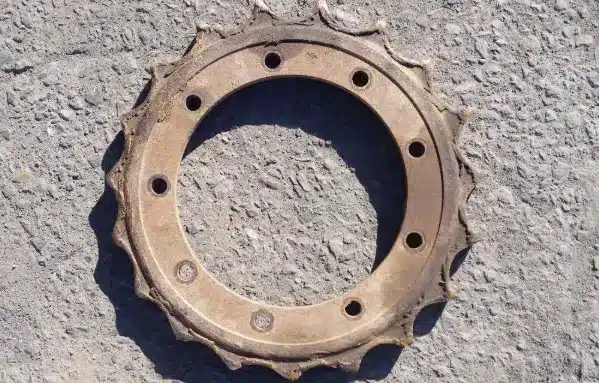
Healthy sprocket teeth are rounded and uniform. As they wear, the teeth become sharp,
pointed, or hooked backward. This prevents proper engagement with the track lugs and
accelerates track wear.
How to Identify:
- Look at the profile of the teeth from the side
- Compare the shape to a new sprocket if possible
- If the tips look sharp, curved, or “shark-fin” shaped, they’re worn
2. Incorrect Tooth Spacing
What’s the issue:
As sprockets wear, the spacing between teeth stretches. When the sprocket pitch no longer
matches the pitch of your track’s drive lugs, the track won’t seat correctly. This leads to
skipping, clicking, and rapid lug damage.
How to Identify:
- Rotate the track slowly and watch how the lugs sit in the sprocket
- Look for lugs riding high, not dropping fully into the gaps
- Listen for rhythmic clicking or snapping during movement
3. Uneven or Accelerated Track Wear
What’s the issue:
Tracks and sprockets wear together. If the sprocket is worn, it will chew into the drive lugs,
causing premature or uneven wear. This often shows up as torn, cracked, or slanted lugs.
How to Identify:
- Inspect the inner drive lugs for cracking or chunking
- Look for lugs worn more on one side than the other
- Check if the track derails more often than usual
4. Visible Wear on the Sprocket Hub or Flange
What’s the issue:
Wear doesn’t just happen on the teeth. If the hub or flange is grooved, polished, or wobbling,
the sprocket is no longer running straight. This can cause alignment issues that damage the
entire undercarriage.
How to Identify:
- Look for shiny metal, grooves, or rust trails on the hub
- Spin the sprocket and watch for side-to-side wobble
- Check for metal dust or flakes around the sprocket area
5. Excessive Noise or Vibration
What’s the issue:
A worn sprocket won’t mesh smoothly with the track. This creates grinding, clunking, or
vibration that you can feel through the cab. It’s often one of the last signs before failure.
How to Identify:
- Listen for clicking, popping, or grinding while moving
- Pay attention to vibration during turns or under load
- If the machine feels “rougher” than usual, inspect the sprocket first
Conclusion: Don’t Wait Until Sprocket Wear Costs You More
Worn sprockets don’t just slow you down, they shorten the life of your rubber tracks, strain
your undercarriage, and lead to costly downtime. If you’re seeing any of the signs above,
replacing your sprockets now is the smartest move you can make.
Here at North East Attachment & Track, we stock high‑quality sprockets for skid steers, mini
excavators, and compact track loaders across all major brands.
Get the right fit, fast shipping, and parts built to last.
Order your new sprockets today and keep your machine running at its best.